Having been to Chiang Mai several times, we were eager to try some new activities and hiking the Monk’s Trail was high on our list.
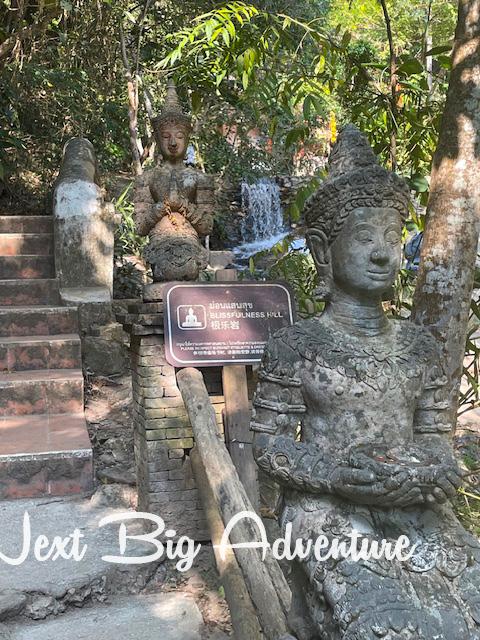
Wat Phrae That Doi Suthep is always a must visit when we go to Chiang Mai, but this time we wanted to start our day with the hike to Wat Pha Lat to get some steps in nature before heading further up the hill.
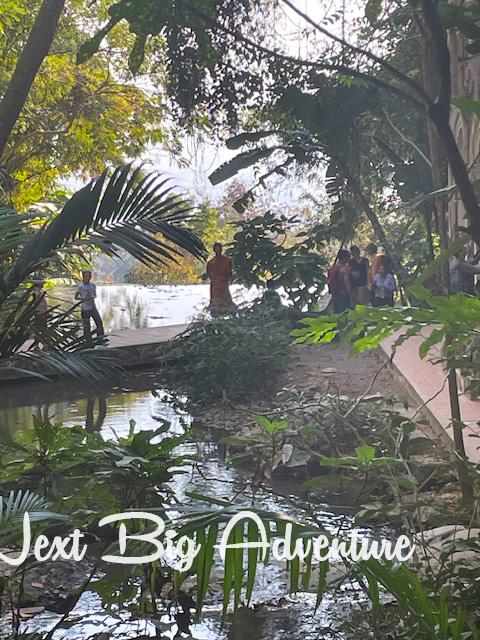
The Monk’s Trail is a well-known and very popular hike leading to the serene Buddhist temple set along a trickling creek. Although we find most Buddhist temples peaceful, the jungle setting, complete with a natural infinity pool, makes this temple absolutely stunning.
The Trailhead
The hike begins by the rear entrance of the Chiang Mai Zoo, so we grabbed a Tuk-Tuk and headed off around 7:00 am. Not paying enough attention while chatting, we didn’t question our driver when he told us the trailhead was “just there” while pointing up the hill. Scammed!
He got lazy and dropped us about 1/2 mile down the hill from the actual trailhead, so we kicked ourselves for the rookie mistake, but got in plenty of extra steps before we arrived at the actual start of our hike. Tip: Make sure you’re taken all the way to the top of the hill, where you’ll find plenty of tuk-tuks and songthaews waiting for the hikers on their return.
All of the drivers know the location, but make sure to check out the All Trails listing to make sure they’re bringing you to the correct spot.
The Trail
Although the trail continues past Wat Pha Lat all the way up to Doi Suthep, we chose to just hike as far as Wat Pha Lat. This beginning portion of the trip takes about 45 minutes, and although it has a few slippery or steep spots, it is a relatively easy climb.
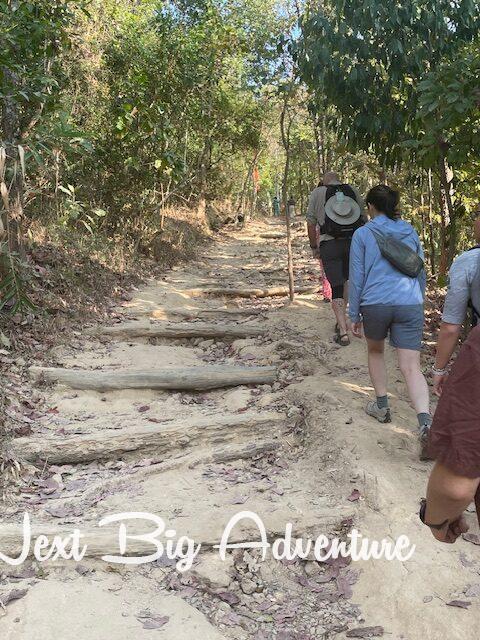
We joined a couple of dozen other pilgrims and headed along the path clearly marked with colorful trail markers. Young and old alike all took in the stunning mountain scenery, and the people watching was almost as good as the glimpses of the city far below. Everyone, from 5-year-old children to a quite elderly but still spry Thai woman in traditional dress, followed the path upwards. The secret is out..
The 3km/160m (520 ft) went by quickly, and soon we arrived at the little slice of heaven that is Wat Pha Lat. I was instantly smitten.
If I were ever planning on doing a multi-day meditation retreat, this would be my location of choice.
Wat Pha Lat temple
The temple dates back to the 14th century, and was used as a resting spot for monks and pilgrims on their way to Doi Suthep.
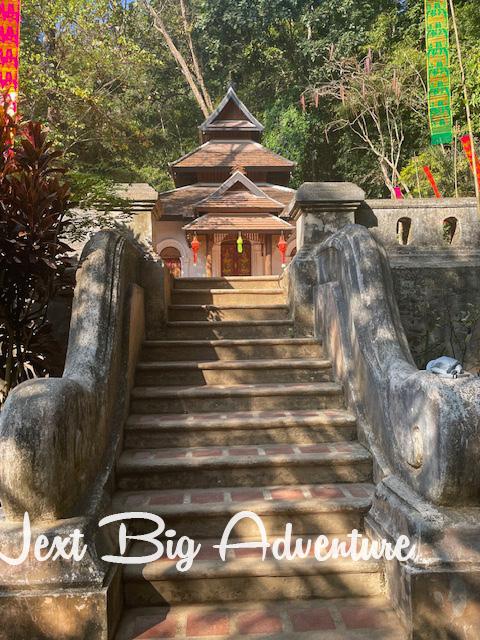
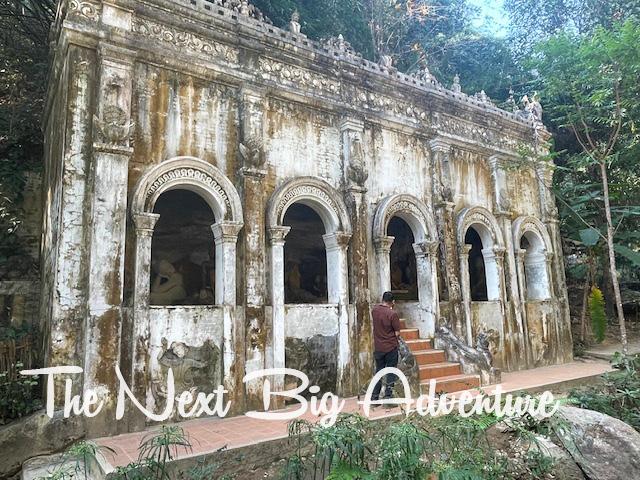
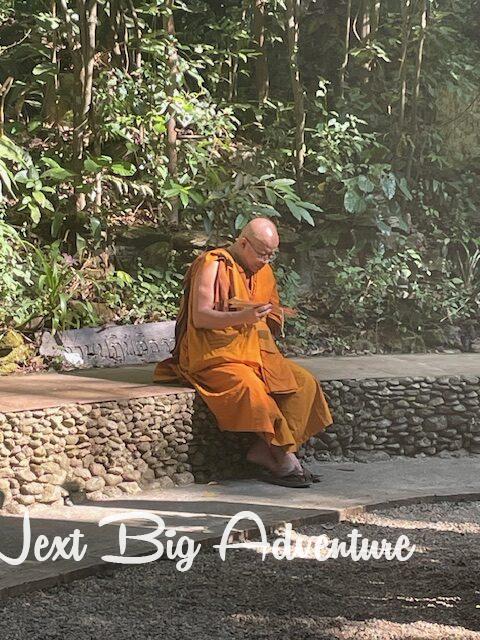
We spent an hour or so wandering around the site, mostly in silence, as we took in the breathtaking scene of saffron-robed monks intermingling with travelers. The pieces were being put into place for some sort of ceremony later that day, so a flurry of activity in the main courtyard was slightly less contemplative than other areas of the temple, but also allowed for a bit of an insider’s look into the customs of the temple.
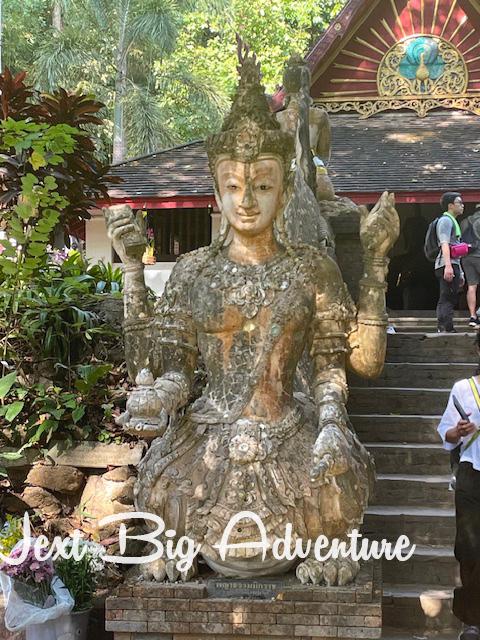
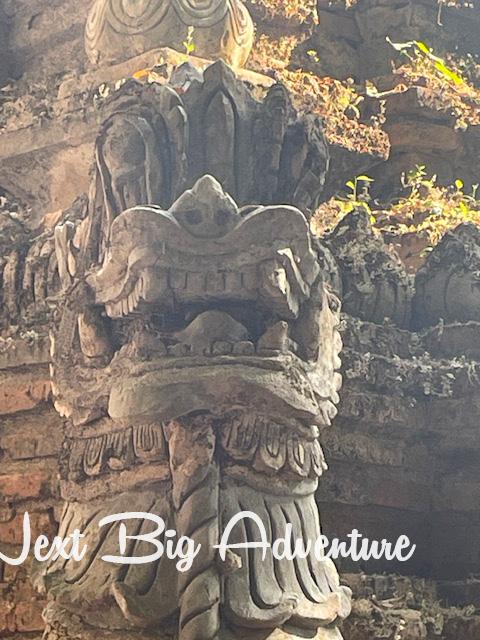
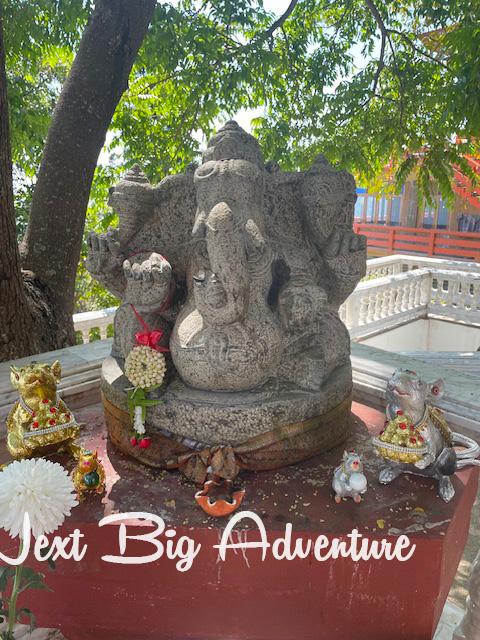
According to legend, King Kuena’s white elephant stopped at the site of Wat Pha Lat while transporting Buddhist relics to Doi Suthep, before dying at the top of the mountain. This caused the king to order temples built at both sites. Although partially hidden by the jungle, you can see the carving done in honor of the elephant.
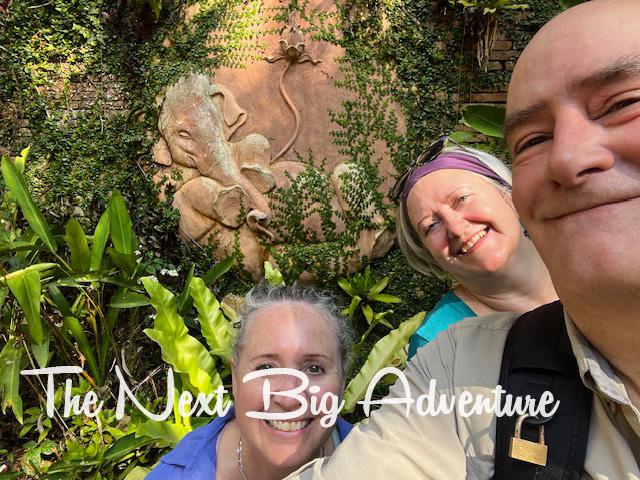
Too soon, we decided to head back down the trail and catch a ride up to the big daddy, Doi Suthep.
Doi Suthep
After our fantastic morning hiking to Wat Pha Lat, we hailed a songthaew and continued up to the spectacular temple of Doi Suthep. It is possible, for those in much better shape or much more motivated, to continue on another couple of hours to the top of the hill, hiking above Wat Pha Latl. With the heat and humidity, we chose to hitch a ride and spend our time enjoying fresh coconut smoothies instead.
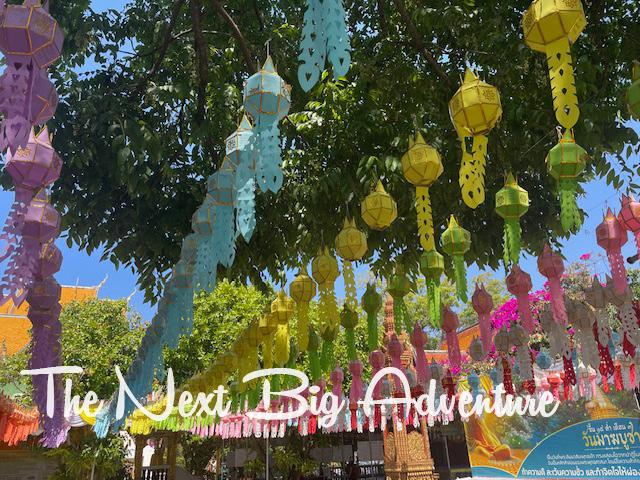
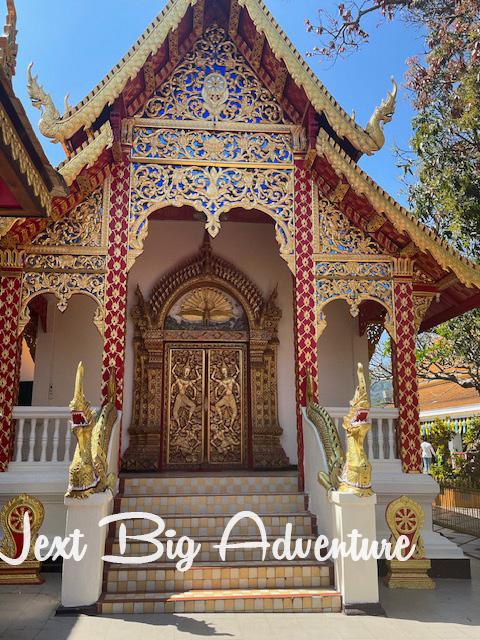
Wat Phrae That Doi Suthep has always been a highlight of our visits to Northern Thailand. Sitting at nearly 6000′, the temple complex is stunning, and the views over the city and entire valley are well worth the trip.
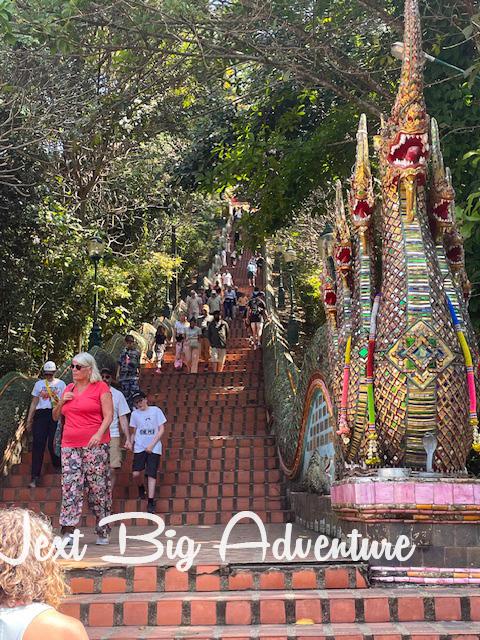
Built in the early 19th century, the entrance to the temple is dramatically marked by the seven-headed serpent statues lining the jeweled staircase. We always chose to climb the 306 steps to the temple, and why not, having already climbed to one temple that day. For the faint-hearted at the thought of more steps, there is also a tram option available.
If possible, try for a clear day for truly phenomenal views of the city.
What to Wear
For the love of all things travel, dress appropriately! The Thais value tradition and modesty, and the last thing you should do is wear short shorts, cropped tops, or tight leggings. Shoulders and midriffs should be covered, as well as knees.
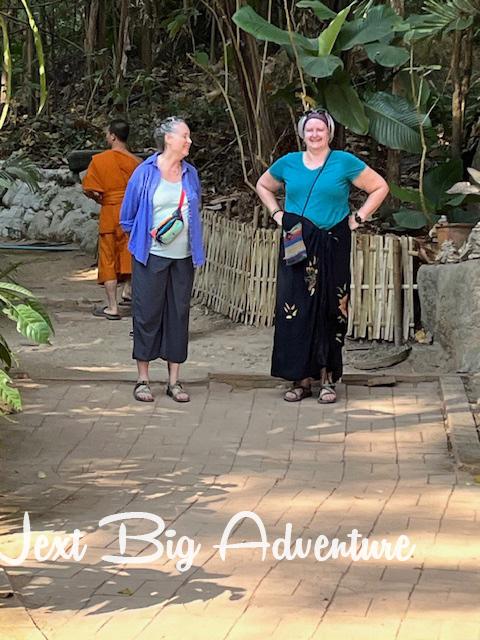
Sturdy shoes are advised, although the monks and some travelers manage in sandals. Spots are uneven or slippery, so take care.
Bring water! Even though much of the trail is partially shaded, Thailand is hot and you will want to take water breaks.
Last Thoughts
Next time you’re in Chiang Mai, plan to spend a morning climbing to Wat Pha Lat to soak in the mystical and serene culture that is so much a part of Thailand.
Losing yourself in the hike while taking in the stunning jungle around you is the perfect way to start the morning in this iconic area of the world.